Street-style photography during fashion week is mostly staged. The photographers know which corners produce the best images and the showgoers know which corners the photographers will be on, and the resulting documentation tells you more about the staged-photography culture than it does about what people are actually wearing. The interesting observation is what people are wearing on Tuesday in Tribeca when no one is staging anything. Here are six looks from non-show-season New York this spring that signal where real taste is moving.
1. The architect uniform — chocolate trouser, oat sweater, flat shoe
The single most-frequent outfit on the women I would actually want to dress like, this spring in lower Manhattan, is the architect uniform. Chocolate trouser, oat or cream sweater, flat leather shoe in a slightly elongated shape. The wardrobe reads as professional without reading as office, the palette is forgiving across body types, and the silhouette works across age ranges in a way that more trend-driven uniforms do not. The women wearing it are not photographed because they are not standing outside shows, but the uniform is doing the work.
2. The vintage Levi's with a tailored blazer
The combination of vintage Levi's — typically the 501 or the 550, in a wash that has been worn rather than distressed — with a soft-shouldered tailored blazer continues to be the off-duty signal for women whose taste has cycled past the recent wave of contemporary denim. The specific cut of the jean matters substantively. The cheap version of this look reads as undergraduate. The right version reads as adult-with-style. The difference is in the rise, the wash, and the fit through the hip.
3. The cashmere overcoat in a slightly oversized cut
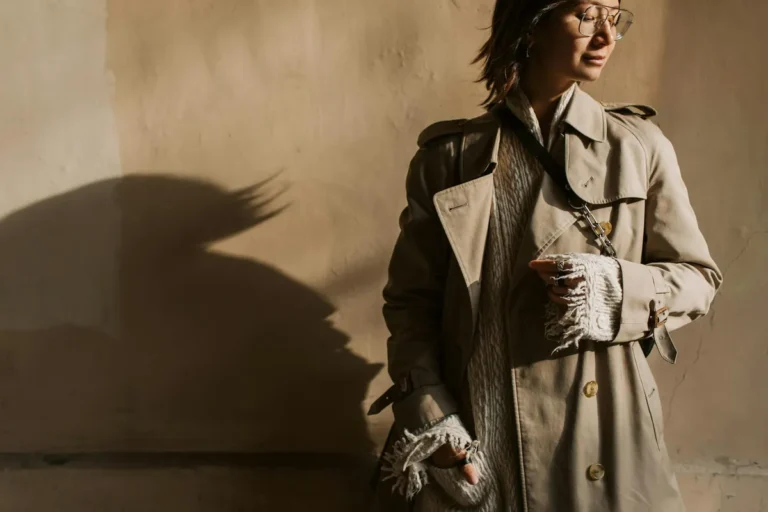
The overcoat that has been working hardest this spring is the cashmere or wool-cashmere blend in a slightly oversized cut, worn over almost anything underneath. The piece does the styling work for the entire outfit, which lets the underneath be casual without the overall look reading casual. Women who own one of these and rotate it heavily are wearing the same outfit underneath every day and looking different because of how the coat carries the look.
4. The bias-cut slip dress with a chunky boot
The bias-cut slip in cream or oat, worn with a chunky boot rather than a heel, is the spring evening uniform for women in their late twenties and thirties who are over the slip-dress-with-strappy-sandal version that dominated for several seasons. The contrast between the fluidity of the slip and the weight of the boot is the styling note that elevates the look beyond what it would be in either direction alone.
5. The crisp white shirt with whatever underneath
The white shirt is doing more work in spring wardrobes than it has in several years. The version that I keep seeing on women whose taste I trust is the crisp menswear-derived cut — sized up by one — worn with anything underneath that the day requires. The shirt provides the visual anchor and the underneath is essentially invisible because the eye is reading the shirt. The styling logic is simple and the execution requires the right shirt, which is the limiting factor.
6. The flat leather sandal with a long skirt
The combination of a flat leather sandal — minimal strap construction, supple rather than slick leather — with a long bias or column skirt is the spring uniform for women who have aged out of the heel-with-skirt formula. The look reads adult without reading severe, photographs well, and works across the broader contexts that women in their thirties and forties actually need to dress for.
What real-life New York is signaling
The six looks above are not staged for any photographer. They are what women whose taste I track are actually wearing when they are not at a show. The consistency across the wardrobes is striking — neutral palettes, considered pieces, soft tailoring, and a deliberate avoidance of the staged-street-style aesthetic that the show-week photography produces.
The implication for reading street style as a signal is that the staged photography and the actual wardrobes have diverged. The staged photography continues to chase novelty because the photographers and the showgoers both benefit from the documentation. The actual wardrobes have settled into a quieter register that the photography does not capture as well because the photography is selected for what reads at twenty feet through a long lens. The street-style intelligence that matters is increasingly happening outside the photography, which is a methodological problem for anyone trying to read it but a genuine signal about where taste is going.