Show season produces a strange wardrobe problem. Editors are photographed dozens of times between Monday morning at the first show and Friday evening at the last after-party, the temperature ranges from raw to barely tolerable depending on the city, and every outfit has to read both at a glance from twenty feet away and up close in the elevator at the hotel. The coat does most of the work. Get the coat right and the rest of the outfit can be quiet. Get the coat wrong and nothing underneath rescues it.
This February was unusually consistent. The wide trend was toward heavier-weight wool, longer lengths, and palettes that stayed inside the camel-to-chocolate range with occasional black for the editors who refuse to leave it. Here are the seven coats that actually showed up.
1. The double-faced wool wrap in camel
The double-faced wool wrap returned hard. The Max Mara archetype was the reference but the executions varied — The Row's version photographed everywhere, a Toteme variant appeared on editors who wanted the silhouette at a kinder price, and at least three quietly-styled Khaite coats made the rotation. The wrap closure does the styling work. No buttons, no belt, no fuss. The coat reads as soft tailoring from across the street and as serious investment when you get close.
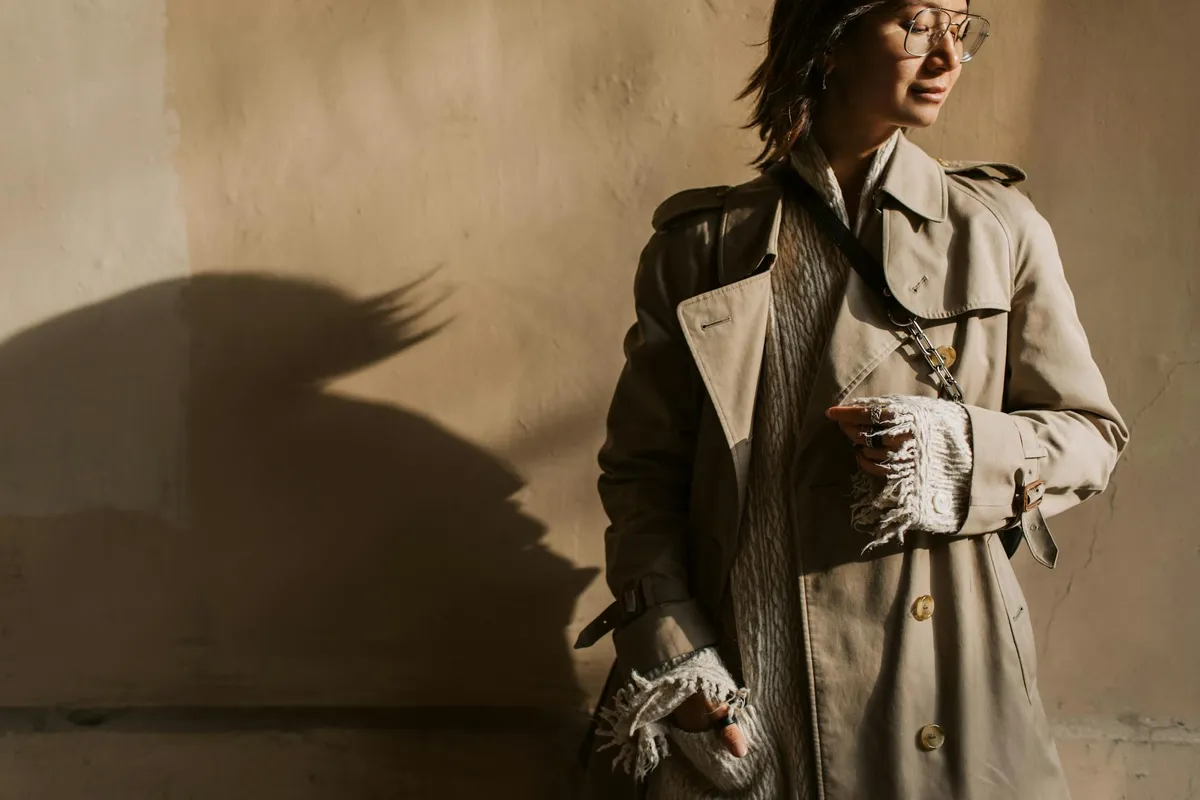
2. The chocolate-brown trench, lengthened
The trench got longer and browner. Mid-calf at minimum, ankle-grazing on the editors who fully committed. Burberry's heritage trenches are still in the rotation but the version that actually photographed was the slightly oversized Saint Laurent shape that Anthony Vaccarello has been quietly pushing for several seasons. The shift from black trench to chocolate trench is the kind of color move that signals editor rather than tourist.
3. The shearling-collar wool coat
The single styling note that moved the most this February was the shearling collar attached to an otherwise simple wool coat. Brunello Cucinelli has been doing it for years and the influence finally arrived everywhere. The look reads warm without reading bulky and softens the line of a sharp tailored coat in a way that photographs as expensive rather than fussy.
4. The oversized navy peacoat
The peacoat moved up in scale. Editors who in previous seasons would have worn a fitted navy coat were in pieces that ran one to two sizes larger than the body would naturally take. The reference is partly Phoebe Philo's relaunch and partly the broader shift toward menswear-derived silhouettes that have been working for several seasons. The oversized navy peacoat with quiet trousers and a flat shoe was a uniform.
5. The black leather trench
The black leather trench is not for everyone but the editors who wore it wore it well. The cleanest versions came out of Bottega Veneta's recent collections and out of small Italian leather houses that the front row has been quietly visiting for years. The piece works as outerwear and as a statement without crossing into costume — when it is cut right. When it is not cut right it looks like a Halloween prop, which is why fewer editors attempt it than attempt the camel wrap.
6. The cashmere overcoat in storm gray
The gray cashmere overcoat was the quiet workhorse. Loro Piana for the editors with the budget, a handful of Italian and French makers for everyone else. Storm gray rather than charcoal because the warmer undertone photographs better against most skin tones and reads more current. The piece pairs with everything underneath and does not demand attention, which is exactly why it kept showing up.
7. The oversized car coat in chocolate or oat
The car coat returned in the boxier proportions that menswear has been working through for several seasons. Hed Mayner, The Row's recent menswear work, and small Japanese houses including Auralee all produced versions that appeared on editors who wanted a coat that read serious rather than fashion-y. The car coat reads architectural rather than draped, which is the right counterpoint to a season otherwise dominated by softer silhouettes.
What the coat trend actually signals
The consistency across editors this February was about more than coats. The broader signal is that the show-season uniform has settled into a narrow palette and a narrow silhouette range, with the variation happening at the level of cut, fabric, and small styling details rather than at the level of dramatic statement pieces. The editors who used to dress for the street-style photographers have largely backed off from costume dressing, and the editors who never did it in the first place have been quietly vindicated.
The shift maps onto the broader quiet-luxury conversation that has been working through the industry for several seasons. The coats are not screaming. They are doing the work. That is, as it turns out, what editors have always wanted them to do.