Understanding the diverse landscape of heel types is fundamental for anyone seeking to make informed footwear choices, whether for personal style, professional presentation, or event-specific needs. Each heel design offers distinct advantages in terms of aesthetics, stability, and comfort, directly influencing how a shoe performs across different occasions and outfits. This guide details the primary categories of heels, outlining their defining characteristics, typical applications, and the functional benefits they provide, enabling a more strategic approach to building a versatile and effective shoe collection. The primary differentiator among heel types often lies in their width, height, and overall shape, which collectively dictate the shoe's silhouette and its practical wearability. Stiletto Heel
The stiletto is defined by its slender, high, and often needle-thin profile. Heights typically range from 3 to 5 inches (7.5 to 12.5 cm) or more. Its primary function is to create an elongated leg line and a dramatic, elegant aesthetic.
Best for: Formal events, evening wear, and occasions where visual impact and a refined silhouette are prioritized over prolonged standing or walking on uneven surfaces.
Considerations: Due to its narrow base, the stiletto offers minimal weight distribution, making it less stable than wider heel types. This design demands a confident stride and is best suited for controlled environments. Block Heel
Characterized by its solid, chunky, and often square or rectangular shape, the block heel provides a significantly larger surface area than a stiletto. Heights vary widely, from low (1-2 inches) to high (4+ inches).
Best for: Everyday wear, professional settings, and events requiring extended periods of standing or walking. Its stability makes it suitable for various terrains, including cobblestones or grass, where a stiletto would sink.
Considerations: The increased surface area distributes body weight more evenly across the foot, enhancing comfort and reducing pressure points compared to thinner heels. This makes block heels a practical choice for all-day wear. Wedge Heel
A wedge heel is a solid piece of material that runs from the back of the shoe to the front, elevating the entire foot. It offers continuous support along the sole. Wedge heights can range from a subtle lift to several inches.
Best for: Casual to semi-formal occasions, particularly in warmer weather. Wedges pair well with maxi dresses, skirts, and wide-leg trousers, offering height without the instability of a traditional heel.
Considerations: The full-length contact with the ground provides superior stability and comfort, often making wedges a preferred alternative for those who find traditional heels challenging. They distribute weight across the entire foot, reducing strain on the ball of the foot. Kitten Heel
The kitten heel is a short, slender heel, typically between 1.5 to 2 inches (3.5 to 5 cm) in height. It often features a slight curve, tapering to a fine point.
Best for: Professional environments, daytime events, and for individuals seeking a subtle lift without the discomfort or formality of a higher heel. They are a practical choice for extended wear.
Considerations: This heel type offers a balance of elegance and comfort. Its lower height provides more stability and reduces the arch strain associated with higher heels, making it a functional option for daily wear. Cone Heel
As its name suggests, the cone heel is wider at the top, where it meets the shoe, and tapers down to a narrower point at the base, resembling an ice cream cone. Heights vary, but they are typically medium to high.
Best for: Adding a distinctive, architectural element to outfits. Cone heels work well for both casual and dressy occasions, offering a unique silhouette that stands out.
Considerations: The wider base at the top provides more stability than a stiletto, while the tapered bottom maintains a refined look. This design offers a good compromise between stability and aesthetic appeal. Spool Heel
The spool heel is characterized by its hourglass shape: wider at the top and bottom, and narrower in the middle. This design often evokes a vintage or baroque aesthetic.
Best for: Adding a retro or classic touch to outfits. Spool heels are frequently found on vintage-inspired pumps, mules, and boots, suitable for fashion-forward or themed events.
Considerations: While visually distinct, the spool heel generally provides reasonable stability due to its wider contact points at the top and bottom. Its unique shape can be a focal point of the shoe's design. Platform Heel
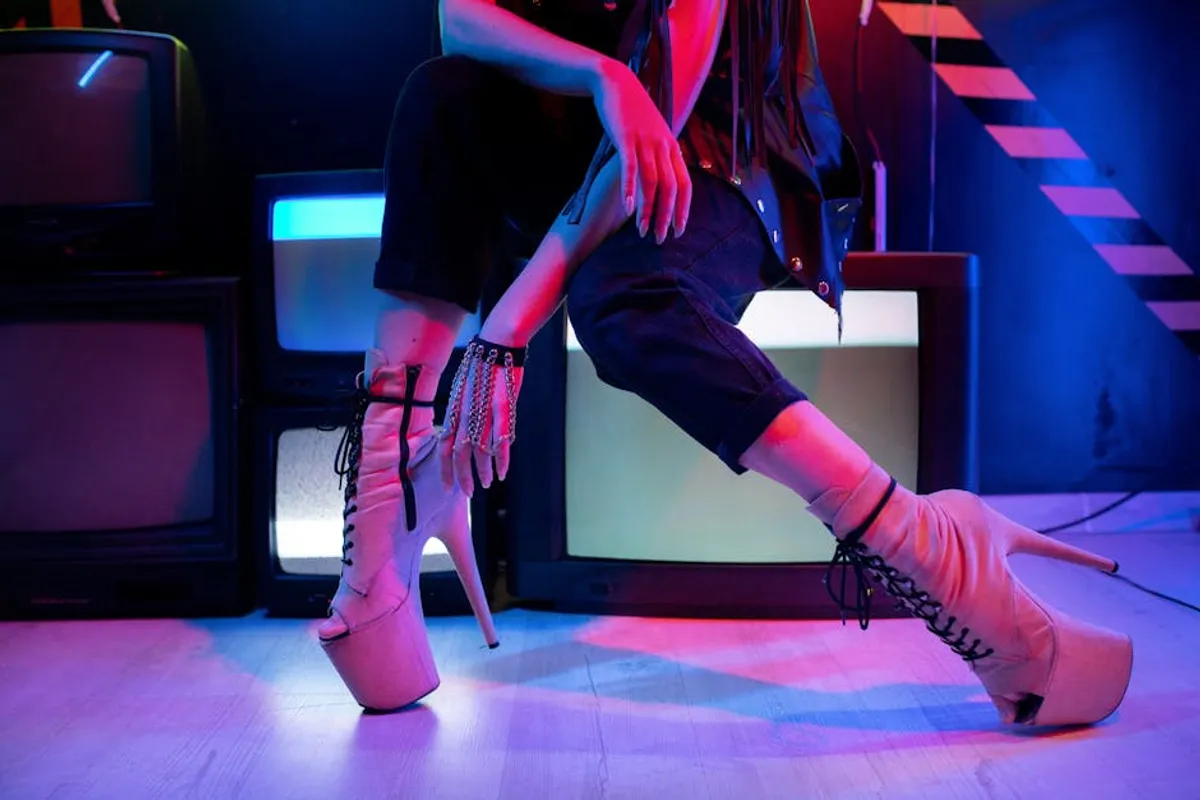
A platform heel incorporates a raised sole under the ball of the foot, effectively reducing the incline of the foot even when the heel itself is very high. The heel height is measured from the ground, but the "effective" heel height (the difference between the heel and the platform) is often much less.
Best for: Maximizing height without sacrificing comfort. Platforms are popular for evening wear, clubbing, and fashion statements, offering a dramatic lift with enhanced stability compared to a high heel without a platform.
Considerations: The platform reduces the angle of the foot, making very high heels more walkable and comfortable. It also adds a bold, substantial look to the footwear. French Heel (Louis Heel)
The French heel, also known as the Louis heel, is characterized by its distinctive curved shape. It often flares out at the top, curves inwards, and then flares out again slightly towards the bottom. It typically has a medium height.
Best for: Vintage-inspired fashion, formal occasions, and adding a touch of historical elegance to an ensemble. It's a classic design often seen on pumps and court shoes.
Considerations: This heel offers a more decorative and refined alternative to straight heels. Its design provides a moderate level of stability, making it suitable for events where a sophisticated look is desired. Flare Heel
The flare heel is narrower at the top where it meets the shoe and widens significantly towards the bottom, creating a flared silhouette. This design can range from subtle to dramatic.
Best for: Contemporary fashion, adding a modern and edgy touch to outfits. Flare heels are versatile, appearing on boots, sandals, and pumps for both casual and dressier occasions.
Considerations: The wider base at the bottom of the flare heel provides enhanced stability compared to a straight, narrow heel. This makes it a comfortable and stylish option for those seeking a modern aesthetic with improved walkability. This guide details the primary categories of heels, outlining their defining characteristics, typical applications, and the functional benefits they provide, enabling a more strategic approach to building a versatile and effective shoe collection.
Pro Tip: When selecting heels, always consider the surface you'll be walking on. Thinner heels like stilettos are ill-suited for grass, grates, or cobblestones, risking damage to the heel or causing falls. For such environments, opt for block heels, wedges, or wider flare heels for practical stability.
Building Your Heel Wardrobe
A well-rounded heel collection balances aesthetic appeal with practical utility. Consider a core selection that covers various needs:
- A classic stiletto for formal events and power dressing.
- A comfortable block heel for daily wear and extended standing.
- A versatile wedge for casual outings and warm weather.
- A low kitten heel for professional settings or subtle elegance.
- A platform heel for maximizing height with comfort for special occasions.
Understanding the functional differences allows for strategic choices that enhance both personal style and comfort, ensuring that each pair of heels serves its intended purpose effectively. Frequently Asked Questions Which heel type is generally considered the most comfortable for long periods?
Wedge heels typically offer the most comfort for extended wear due to their full-length support and even weight distribution. Block heels are a close second, providing significant stability and comfort compared to thinner heel types. What is the main difference between a stiletto and a kitten heel?
The primary difference lies in height and width. A stiletto is a very high, thin heel, usually 3 inches or more. A kitten heel is a short, slender heel, typically 1.5 to 2 inches, offering a more subtle lift and greater stability. Can I wear heels to a casual outdoor event?
Yes, but choose wisely. For casual outdoor events, especially on grass or uneven terrain, opt for block heels or wedges. These styles provide a wider, more stable base that prevents sinking and offers better balance than stilettos or very thin heels. Are platform heels truly more comfortable than regular high heels?
Yes, generally. Platform heels feature a raised sole under the front of the foot, which reduces the effective incline of the foot. This lessens the angle at which your foot is bent, making very high heels feel more comfortable and easier to walk in by reducing pressure on the ball of the foot.