Choosing the right haircut for boys and men involves more than just selecting a style from a picture. It requires a practical assessment of hair type, face shape, lifestyle demands, and maintenance commitment. A well-chosen cut enhances features, simplifies daily routines, and projects a desired image, whether for school, professional settings, or casual wear. This guide explores a range of popular and enduring haircut ideas, detailing their characteristics, suitability, and upkeep requirements to inform a precise decision.
Key Considerations When Choosing a Boy's Haircut
Before committing to a haircut, evaluate several critical factors to ensure the style aligns with the individual's needs and hair characteristics. Ignoring these can lead to dissatisfaction, high maintenance, or an unsuitable aesthetic.
- Hair Texture and Density: Fine, thick, curly, wavy, or straight hair each respond differently to cutting techniques. Some styles rely on natural volume or curl, while others require specific textures to hold shape. For instance, a textured crop works well with thicker, slightly wavy hair, while a slick back is more forgiving on straight, medium-density hair.
- Face Shape: Haircuts can balance or accentuate facial features. Round faces often benefit from styles with height or sharp angles to add definition. Square faces can be softened by styles with more volume on top or slightly longer sides. Oval faces are generally versatile and suit most styles.
- Lifestyle and Maintenance: Consider the time available for daily styling. A low-maintenance buzz cut requires minimal effort, while a pompadour demands regular product application and careful shaping. Active individuals might prefer styles that stay neat without constant adjustment.
- Age Appropriateness: While many styles transcend age, some are more common or practical for specific age groups. Younger boys might benefit from simpler, less structured cuts, whereas teenagers and men might explore more complex or fashion-forward options.
- Growth and Trimming Frequency: Understand how quickly a style will grow out and the necessary frequency of trims to maintain its integrity. Fades and very short styles typically require trims every 2-4 weeks, while longer styles can go 6-8 weeks between cuts.
1. The Classic Undercut
The classic undercut features noticeably shorter sides and back, often buzzed or faded, contrasting sharply with significant length left on top. This style creates a distinct separation, allowing the top hair to be styled in various ways, from slicked back to a voluminous quiff. Its appeal lies in its clean, sharp lines and the versatility of the longer top section.
Best For: Men and boys with medium to thick hair, straight or slightly wavy textures. It complements oval, square, and angular face shapes by emphasizing the jawline and adding height.
Pros:
- Sharp, modern aesthetic with a timeless appeal.
- Versatile top allows for multiple styling options (slick back, quiff, textured).
- Clean sides and back reduce bulk and can be cooler in warmer climates.
Cons:
- Requires regular trims (every 3-4 weeks) to maintain the sharp contrast.
- The longer top often necessitates daily styling with product.
- May not suit very fine or thinning hair, as the contrast can make the top appear sparser.
Verdict: A strong choice for those seeking a bold, adaptable look that balances classic structure with contemporary styling potential, provided they commit to frequent maintenance.
2. Textured Crop
The textured crop is characterized by short, often choppy hair on top, styled forward or slightly to the side, with a noticeable fringe. The sides and back are typically faded or tapered for a clean finish. The "texture" comes from layers and specific cutting techniques that encourage natural movement and a slightly dishevelled, yet intentional, look.
Best For: Individuals with medium to thick hair, especially those with some natural wave or texture. It works well for most face shapes, particularly those who want to soften a strong jawline or add width to a longer face.
Pros:
- Low to medium maintenance, often requiring minimal styling product.
- Modern and youthful appearance.
- The fringe can help conceal a receding hairline or a larger forehead.
- Adds volume and movement to the hair.
Cons:
- Less formal than some other styles, potentially unsuitable for very strict professional environments without careful styling.
- Requires specific cutting techniques to achieve the desired texture, so a skilled barber is crucial.
- Can look messy if not properly cut or if the hair texture isn't suitable.
Verdict: An excellent option for a contemporary, stylish look that offers good versatility for daily wear, particularly for those with hair that naturally holds some texture.
3. French Crop
Similar to the textured crop, the French crop features short hair on the sides and back, often faded, with a slightly longer top section that is cut bluntly to form a short, straight fringe across the forehead. The key distinction is the more uniform, often straighter fringe and a less overtly "textured" top, leaning towards a cleaner, more precise aesthetic.
Best For: Straight or slightly wavy hair of medium density. It suits most face shapes, offering a clean, defined look that can be particularly flattering for round or oval faces by adding angularity.
Pros:
- Very clean and neat appearance.
- Low maintenance, often requiring minimal styling.
- The blunt fringe can effectively cover the forehead and create a strong facial frame.
- Timeless and adaptable for various settings.
Cons:
- Less versatile in styling compared to the textured crop or undercut.
- Requires precise cutting to maintain the straight fringe line.
- May not suit very curly or unruly hair without significant effort to straighten.
Verdict: A reliable, stylish choice for those who prefer a clean, low-fuss haircut with a defined, modern edge, especially if their hair is naturally straight or easily managed.
4. The Quiff
The quiff is characterized by short sides and back, often faded or tapered, with significantly longer hair on top that is swept upwards and backwards, creating volume and height at the front. It's a classic style that can range from a subtle lift to a dramatic, sculpted wave, conveying sophistication and confidence.
Best For: Men and boys with medium to thick hair that is straight or has a slight wave. It is particularly effective for round or square face shapes, as the height adds length and definition.
Pros:
- Adds significant volume and height, creating a distinguished profile.
- Can be adapted for various levels of formality, from casual to polished.
- Timeless appeal that remains consistently fashionable.
- Offers a sense of confident styling.
Cons:
- Requires daily styling with specific products (pomade, wax, hairspray) to maintain shape and hold.
- Frequent trims (every 3-5 weeks) are necessary to keep the sides neat and the top manageable.
- May not hold well in humid conditions or for individuals with very fine hair without strong products.
Verdict: A highly stylish and impactful haircut for those willing to invest daily time in styling, offering a sophisticated and elevated aesthetic.
5. The Pompadour
The pompadour is a more exaggerated and often smoother version of the quiff, featuring a large volume of hair swept upwards and backwards from the forehead, often with a rounded, glossy finish. The sides and back are typically kept shorter, either faded or tapered, to emphasize the dramatic top. It exudes a retro yet perpetually fashionable vibe.
Best For: Individuals with thick, straight, or slightly wavy hair that can hold significant volume. Best suits oval, square, and diamond face shapes, as it adds considerable height and presence.
Pros:
- Creates a bold, iconic, and highly polished look.
- Adds significant height and can make the wearer appear taller.
- Versatile enough to be styled in modern or vintage interpretations.
Cons:
- High maintenance, requiring considerable time and product for daily styling (blow-drying, pomade, strong hold spray).
- Not suitable for fine or thinning hair, as it relies heavily on natural volume.
- Requires frequent trims to maintain the contrast and shape.
- Can feel heavy or cumbersome for some.
Verdict: A statement haircut for those committed to meticulous styling and maintenance, offering a distinctive and powerful aesthetic that commands attention.
6. Side Part
The side part is a classic and versatile haircut characterized by a distinct parting line, often created by combing the hair to one side. The hair on top is typically left long enough to sweep over, while the sides and back can vary from short and tapered to slightly longer. It's a timeless style that projects a clean, professional, and refined image.
Best For: All hair types and most face shapes, especially those seeking a polished and adaptable look. It's particularly effective for professional settings or formal occasions.
Pros:
- Extremely versatile, suitable for various ages and contexts.
- Can be styled for a neat, conservative look or with more volume for a modern twist.
- Relatively low to medium maintenance, depending on the length and desired hold.
- A universally accepted and classic style.
Cons:
- Can appear overly traditional if not updated with modern cutting techniques (e.g., a fade on the sides).
- May require daily combing and light product to maintain the part and shape.
- Less impactful or fashion-forward than some trendier styles.
Verdict: An enduring and reliable choice for a clean, respectable appearance that can be subtly customized to fit individual preferences and modern trends.
7. Buzz Cut
The buzz cut involves uniformly cutting the hair very short all over the head, typically with electric clippers set to a single guard length. It is the epitome of low maintenance and practicality, offering a clean, minimalist aesthetic. Variations include slightly longer tops or faded sides, but the core remains extreme shortness.
Best For: Individuals seeking ultimate low maintenance, athletes, or those with thinning hair who want a neat solution. It can highlight strong facial features and is suitable for most hair types.
Pros:
- Extremely low maintenance; requires no styling.
- Cool and comfortable, especially in warm climates.
- Cost-effective, as it can often be maintained at home.
- Projects a clean, masculine, and no-nonsense image.
Cons:
- Offers minimal styling versatility.
- Exposes the scalp and head shape, which may not be flattering for everyone.
- Requires frequent self-trimming or barber visits to maintain uniform shortness.
- Can be perceived as harsh or overly simple by some.
Verdict: The ultimate practical haircut for those prioritizing ease and minimal fuss, suitable for individuals with confident facial features and a preference for a stark, clean look.
8. Crew Cut
The crew cut is a classic, military-inspired style where the hair on top is cut relatively short, gradually tapering from front to back, with the longest hair at the front. The sides and back are typically faded or tapered very short. It's a neat, tidy, and masculine haircut that offers a balance between the extreme shortness of a buzz cut and the length of a side part.
Best For: Most hair types and face shapes. It's an excellent choice for a clean, professional, and athletic look, suitable for boys and men of all ages.
Pros:
- Low to medium maintenance, often requiring minimal styling.
- Projects a clean, professional, and disciplined image.
- Versatile enough for both formal and casual settings.
- Comfortable and practical.
Cons:
- Less room for creative styling compared to longer cuts.
- Requires regular trims (every 3-4 weeks) to maintain its sharp shape and fade.
- Can appear somewhat generic if not customized with a modern fade or slight texture on top.
Verdict: A dependable and universally flattering haircut for those seeking a neat, easy-to-manage style that conveys professionalism and classic masculinity.
9. Fringe/Bang Cut
A fringe or bang cut incorporates a section of hair falling over the forehead. This can range from a short, choppy fringe (as in a French crop) to a longer, heavier fringe that sweeps across the forehead or is styled to the side. The rest of the hair can be short, medium, or long, allowing for significant customization around the fringe element.
Best For: Individuals looking to soften facial features, cover a larger forehead, or add a youthful element. Works well with straight or wavy hair of various densities.
Pros:
- Adds a youthful and stylish dimension to a haircut.
- Can effectively frame the face and highlight eyes.
- Offers versatility in styling the fringe (straight, messy, swept).
- Can conceal a receding hairline.
Cons:
- The fringe requires regular trimming to keep it out of the eyes.
- Can be irritating or fall into the eyes during physical activity.
- May require daily styling to keep the fringe in place or achieve a desired look.
- Can become greasy more quickly due to contact with the forehead.
Verdict: A versatile and expressive haircut element that provides a focal point and can significantly alter a look, best for those willing to manage the specific needs of forehead-length hair.
10. Shag/Flow
The shag or "flow" haircut is characterized by longer, layered hair that typically falls over the ears and neck, often with a natural, unkempt texture. It embraces a relaxed, free-spirited aesthetic, emphasizing natural movement and volume. This style avoids sharp lines or overly structured forms, aiming for an effortless, grown-out look.
Best For: Wavy or curly hair that benefits from layers to reduce bulk and enhance natural texture. It suits individuals who prefer a more bohemian or artistic image and are comfortable with longer hair.
Pros:
- Emphasizes natural hair texture and movement.
- Low styling effort for those with naturally wavy or curly hair.
- Offers a relaxed, artistic, and less conventional aesthetic.
- Can be highly flattering for certain face shapes by adding softness and framing.
Cons:
- Requires time to grow out to the desired length.
- May not appear neat or professional enough for some environments.
- Can become unruly or frizzy without proper care for curly/wavy textures.
- Less suitable for very fine or extremely straight hair, which may lack the necessary volume and texture.
Verdict: A distinctive choice for those embracing longer, natural hair and a relaxed aesthetic, particularly effective for individuals with inherent wave or curl who prefer minimal styling intervention.
11. Slick Back
The slick back involves combing all the hair on top of the head straight back, often with a glossy finish achieved through pomade or gel. The sides can be short and faded or kept longer and also slicked back, creating a cohesive, polished, and often rebellious or vintage-inspired look. It emphasizes the contours of the head and face.
Best For: Straight or slightly wavy hair of medium density. It suits oval, square, and angular face shapes by highlighting the bone structure. Ideal for those seeking a sharp, sophisticated, or edgy appearance.
Pros:
- Creates a very clean, polished, and sophisticated aesthetic.
- Can be adapted for a classic vintage look or a more modern, edgy style.
- Effectively keeps hair out of the face.
- Projects an air of confidence and meticulous grooming.
Cons:
- Requires daily styling with strong-hold products, which can sometimes feel heavy or greasy.
- May not hold well in humid conditions or for very thick, unruly hair without significant effort.
- Can make fine hair appear flatter if not styled with volume-enhancing products first.
- Requires regular trims to maintain neatness, especially on the sides.
Verdict: A powerful and distinctive haircut for those who appreciate a highly groomed, structured appearance and are committed to daily product application for a sleek finish.
12. Taper Fade
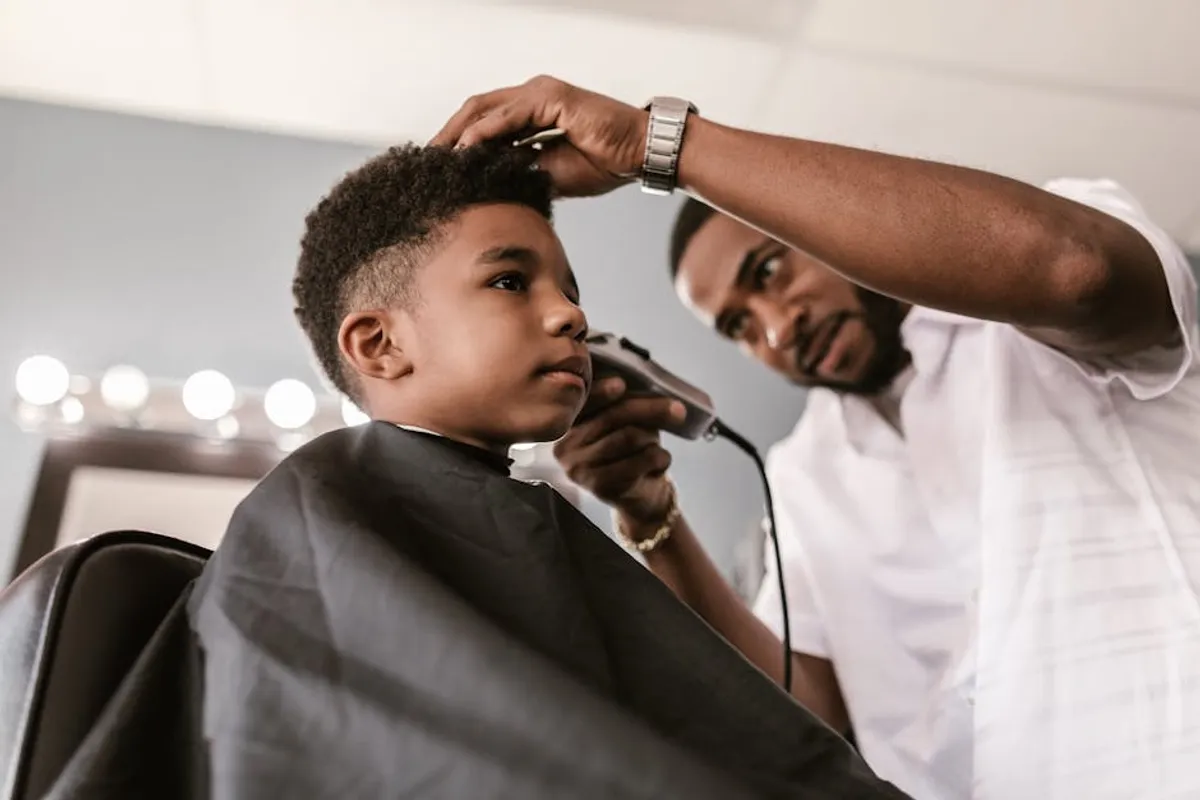
A taper fade is a haircut where the hair gradually shortens from top to bottom, typically starting longer at the top and progressively getting shorter down the sides and back, eventually blending into the skin or very short hair near the neckline and ears. Unlike a traditional fade which might be more aggressive, a taper fade offers a smoother, more subtle transition, maintaining some length at the bottom edge.
Best For: All hair types and face shapes. It provides a clean, modern, and versatile base that can be paired with almost any top style, from a quiff to a textured crop or even longer hair.
Pros:
- Extremely versatile and adaptable to various top lengths and styles.
- Provides a clean, sharp, and modern finish to any haircut.
- Can be customized in terms of how high or low the fade starts.
- Maintains a neat appearance even as it grows out slightly due to the gradual transition.
Cons:
- Requires frequent trims (every 2-4 weeks) to maintain the crispness of the fade.
- A skilled barber is essential to achieve a smooth, even blend.
- Can be less forgiving on irregular head shapes if the fade is too high.
Verdict: An indispensable technique for contemporary men's haircuts, offering a refined and sharp foundation that elevates almost any style, provided regular maintenance is observed.
Selecting the Right Haircut for Your Style and Needs
Choosing a haircut is a personal decision that impacts daily presentation and confidence. Beyond the aesthetic appeal of a particular style, consider the practical implications. Engage in an open dialogue with your barber or stylist. Bring reference photos that illustrate the desired look, but also be prepared to discuss your hair's natural texture, growth patterns, and the time you're willing to dedicate to daily styling. A skilled professional can advise on how a chosen style will translate to your specific hair and facial structure, suggesting modifications for optimal results. Remember that even the best haircut requires maintenance; understand the recommended trimming schedule and product usage to keep your chosen style looking its best.
Frequently Asked Questions About Boys' Haircuts
How often should a boy get a haircut?
For shorter styles like fades, crew cuts, or buzz cuts, a trim every 2-4 weeks is typically needed to maintain sharpness. Longer styles or those with less strict lines might extend to 6-8 weeks, depending on how quickly the hair grows and the desired neatness.
What is the difference between a fade and a taper?
Both involve shortening hair from top to bottom. A fade typically blends hair down to the skin (or very close) much more aggressively and higher up the head. A taper is a more subtle, gradual reduction in length, often leaving some hair at the very bottom and typically confined to the sideburns and neckline, not going as high up the head as a fade.
Can I achieve a specific haircut if my hair is very fine or thinning?
While some styles like voluminous quiffs or pompadours might be challenging with very fine or thinning hair, many others are suitable. Textured crops, French crops, or even buzz cuts can work well. A skilled stylist can advise on cuts that maximize the appearance of density or provide a neat solution for thinning areas.
What products are essential for styling boys' haircuts?
Essential products vary by style. For textured looks, a matte paste or styling cream provides hold without shine. For slick backs or pompadours, a strong-hold pomade or gel is necessary for a glossy, firm finish. A sea salt spray can add texture and volume to wavier hair, while a light hairspray can provide flexible hold for many styles.
How do I communicate effectively with my barber to get the haircut I want?
Bring clear reference photos from multiple angles. Be specific about desired length on top, sides, and back, and discuss the type of fade or taper you prefer. Mention your hair type, daily styling routine, and how often you're willing to get it cut. Clear communication minimizes misunderstandings and helps achieve the desired outcome.