Selecting the right bang style can dramatically alter facial symmetry and highlight key features. The decision extends beyond aesthetic preference, requiring careful consideration of your face shape, hair texture, and daily maintenance commitment. An ill-suited fringe can obscure desirable attributes or exaggerate proportions, while a well-chosen one acts as a strategic frame, enhancing bone structure and eye line. Understanding how different bang types interact with various facial contours is fundamental to achieving a balanced and flattering look. This guide details specific bang styles, outlining their intended effects and ideal pairings, to inform a precise and confident choice.
Before committing to a specific bang style, assess several critical factors. First, accurately identify your face shape: oval, round, square, heart, long/oblong, or diamond. This is the primary determinant for how bangs will frame your features. Next, consider your hair's natural texture and density. Fine, straight hair will behave differently than thick, wavy, or curly hair, impacting how a style lays and whether it requires consistent heat styling. Finally, evaluate your lifestyle and willingness to commit to daily styling and regular trims. Some bang styles demand more frequent salon visits and morning effort than others. Understanding these factors is key to learning how to choose the right fringe for your face shape.
1. Curtain Bangs
Curtain bangs are characterized by their longer length, parting down the middle or slightly off-center, and sweeping outwards to frame the face. They typically hit around the cheekbones or jawline, offering a soft, lived-in aesthetic that blends seamlessly into the rest of the hair. This style gained significant popularity for its versatility and low-maintenance appeal, providing a subtle face-framing effect without the full commitment of a blunt fringe.
Best for: Oval, round, square, heart, and long face shapes. Particularly effective for softening strong jawlines or adding width to narrow faces.
Pros:
- Highly adaptable to various hair lengths and textures.
- Grow out gracefully, minimizing awkward transition phases.
- Require less frequent trimming compared to shorter, blunt styles.
- Offer a flattering, face-framing effect without heavy commitment.
Cons:
- May require daily styling with a round brush or flat iron for optimal shape.
- Can appear stringy on oily foreheads without regular washing or dry shampoo.
- Less impactful for those seeking a dramatic, statement-making fringe.
Verdict: An excellent entry point for bang newcomers or those desiring a versatile, low-commitment style that enhances facial structure with subtle elegance.
2. Blunt Bangs
Blunt bangs are cut straight across the forehead, typically ending just above the eyebrows or grazing them. This style creates a strong, graphic line that draws immediate attention to the eyes and cheekbones. It conveys a bold, fashion-forward statement and works best on hair that is naturally straight or can be styled to maintain its precise, clean edge.
Best for: Oval and long/oblong face shapes, as they can visually shorten the face and add width. Also suitable for heart shapes to balance a wider forehead.
Pros:
- Creates a striking, high-impact aesthetic.
- Highlights the eyes and defines the upper face.
- Adds visual fullness and density to finer hair types.
- Can help to conceal a larger forehead effectively.
Cons:
- Requires precise, regular trims every 2-3 weeks to maintain sharpness.
- Demands consistent styling to keep them straight and in place.
- Can appear too heavy or overwhelming on small or round faces.
- Prone to separating or curling with humidity or natural hair movement.
Verdict: A definitive choice for those seeking a dramatic, high-fashion look who are committed to frequent maintenance and styling for a consistently sharp finish.
3. Wispy Bangs
Wispy bangs are characterized by their light, feathered texture and sparse distribution across the forehead. Unlike blunt bangs, they are intentionally cut to be thin and airy, allowing some forehead to show through. This style offers a softer, more delicate frame for the face, providing a youthful and approachable aesthetic with minimal weight.
Best for: Round, square, and heart face shapes, as they soften angular features and reduce the visual weight of a wider forehead without adding bulk.
Pros:
- Provides a subtle, non-committal introduction to bangs.
- Easier to grow out than thicker styles due to their minimal volume.
- Less prone to looking heavy or greasy compared to full bangs.
- Offer a delicate, youthful frame for the eyes and upper face.
Cons:
- May not provide sufficient coverage for those wishing to conceal a larger forehead.
- Can appear sparse or disappear entirely on very thick or coarse hair.
- Requires some product (e.g., texturizing spray) to maintain their airy separation.
- May require frequent, light trims to prevent them from becoming too long or uneven.
Verdict: An ideal option for individuals seeking a soft, low-maintenance fringe that gently frames the face without making a bold statement, perfect for softening strong features.
4. Side-Swept Bangs
Side-swept bangs are cut at an angle, typically longer on one side and gradually shortening towards the other, designed to sweep across the forehead. This style offers a soft, asymmetrical line that can add dimension and movement to the hair. They are particularly effective at softening facial angles and creating an illusion of length or width where needed.
Best for: Round, square, heart, and long/oblong face shapes. They introduce diagonal lines that break up symmetry and soften strong features.
Pros:
- Extremely versatile and flattering across a wide range of face shapes.
- Grow out seamlessly, often blending into longer layers without awkward stages.
- Require minimal daily styling, often falling naturally into place.
- Add a subtle, sophisticated touch without a full forehead commitment.
Cons:
- Can sometimes feel like they are in the eyes if not trimmed regularly.
- May require a specific part to sit correctly, limiting styling flexibility.
- Less effective for those desiring a dramatic, full-fringe look.
- Can lose their shape and volume if hair is prone to oiliness or humidity.
Verdict: A universally appealing and low-commitment choice, side-swept bangs provide a soft, elegant frame that complements most face shapes and hair textures.
5. Baby Bangs (Micro Bangs)
Baby bangs, also known as micro bangs, are cut significantly shorter than traditional bangs, typically ending 1-2 inches above the eyebrows. This bold, avant-garde style exposes more of the forehead, drawing attention upwards and emphasizing the brow line and eyes. It is a high-fashion choice that conveys confidence and a playful, edgy aesthetic.
Best for: Oval and heart face shapes, as they can elongate the face and highlight balanced features. Can also work on square faces to add an unexpected, softening contrast.
Pros:
- Makes a distinct, fashionable statement.
- Highlights the eyes and brow bone prominently.
- Can create an illusion of a longer face on certain shapes.
- Requires minimal styling time due to their short length.
Cons:
- Demands frequent, precise trims to maintain the desired short length.
- Not forgiving of uneven cuts or growth.
- Can be challenging to grow out gracefully, often requiring pins or clips.
- May emphasize a larger forehead or strong facial features if not balanced correctly.
Verdict: A daring, fashion-forward option for those confident in their facial features and committed to regular salon visits to maintain this precise, high-impact style.
6. Textured Bangs
Textured bangs are cut with varying lengths and layers, creating a fragmented, lived-in appearance rather than a solid line. This style often incorporates subtle layers and point cutting to add movement, volume, and an effortless feel. They are designed to look natural and slightly disheveled, blending well with layered hairstyles and natural hair textures.
Best for: Oval, long/oblong, and diamond face shapes. Excellent for adding softness and movement to otherwise straight or heavy hair, or enhancing natural waves.
Pros:
- Offers a natural, undone aesthetic that is low maintenance.
- Blends well with natural hair texture, requiring less heat styling.
- Adds volume and dimension, preventing a flat or heavy look.
- More forgiving during the grow-out phase compared to blunt styles.
Cons:
- May not provide the strong, defined look desired by some.
- Can appear messy if not cut appropriately for hair thickness.
- Requires specific cutting techniques to achieve the desired texture, not just a straight cut.
- Can sometimes require texturizing products to enhance separation and hold.
Verdict: An ideal choice for individuals seeking a soft, versatile fringe that complements natural hair textures and layered styles, offering an effortless, chic appeal.
7. Arched Bangs
Arched bangs are cut with a slight curve, being shorter in the center and gradually lengthening towards the temples. This creates a soft, rounded frame that mimics the natural arch of the eyebrows. The style provides a classic, feminine look that softens the forehead and draws attention to the eyes, offering a polished alternative to blunt or wispy fringes.
Best for: Oval, long/oblong, and heart face shapes. The arch helps to shorten a long face and soften a wider forehead, providing a harmonious frame.
Pros:
- Offers a classic, elegant, and sophisticated aesthetic.
- Softens the forehead and frames the eyes beautifully.
- Provides good forehead coverage while maintaining a soft line.
- Can be styled to appear fuller or slightly wispy depending on preference.
Cons:
- Requires precise cutting to achieve the perfect arch, making DIY trims difficult.
- Needs regular trimming (every 3-4 weeks) to maintain its defined curve.
- Can appear heavy or boxy if not cut with appropriate layering for hair density.
- May require some heat styling to maintain the desired rounded shape.
Verdict: A refined option for those seeking a classic, feminine fringe that elegantly frames the eyes and softens facial contours, requiring professional maintenance for optimal shape.
8. Choppy Bangs
Choppy bangs are characterized by their uneven, jagged ends, created through point cutting or razor techniques. This style offers an edgy, playful, and slightly rebellious aesthetic, adding instant texture and movement. They are often cut with varying lengths throughout, giving them a deconstructed, piecey look that avoids a solid, heavy line.
Best for: Oval, long/oblong, and square face shapes. The irregular texture helps to soften strong angles and add visual interest, breaking up uniform features.
Pros:
- Creates an edgy, modern, and youthful appearance.
- Adds significant texture and movement to the hair.
- More forgiving than blunt bangs regarding natural hair movement.
- Can be styled with minimal effort for a "cool girl" undone look.
Cons:
- May not suit professional or very conservative environments.
- Requires a skilled stylist to achieve the desired choppy texture without looking messy.
- Can appear too fragmented on very fine or thin hair.
- May require texturizing products to enhance separation and hold the choppy effect.
Verdict: An excellent choice for individuals seeking an unconventional, textured fringe that adds personality and an edgy vibe, best executed by a stylist proficient in razor or point cutting.
9. Piecey Bangs
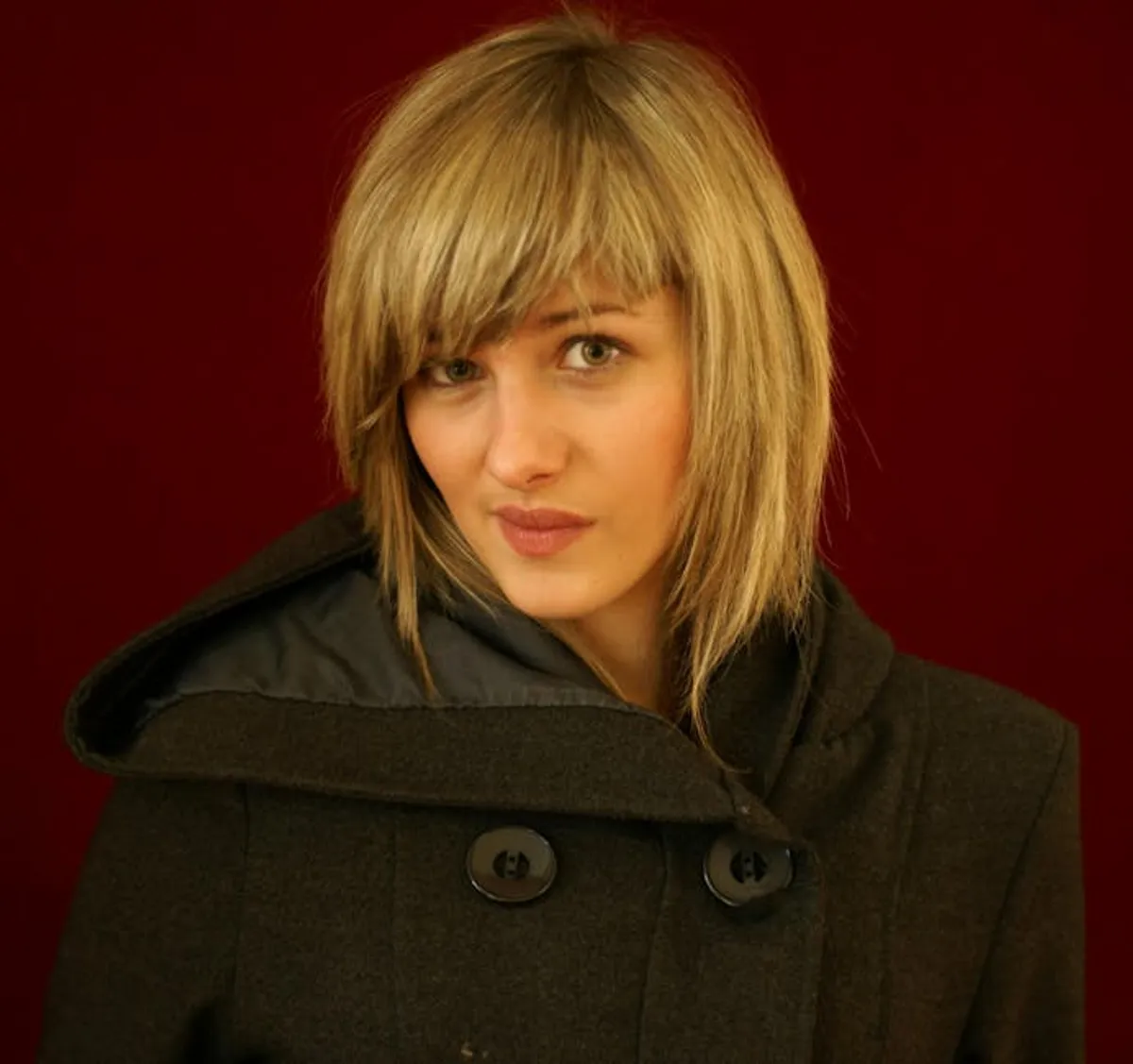
Piecey bangs are similar to wispy bangs but with more defined, separated strands. They are typically cut with subtle layers and texturizing to create distinct sections that frame the face with intentional gaps. This style offers a modern, airy feel, providing coverage without the weight of a full fringe, and drawing attention to the eyes with a soft, artful separation.
Best for: Round, heart, and diamond face shapes. They soften strong features and add definition without overwhelming the face, creating a balanced, airy look.
Pros:
- Offers a soft, modern, and youthful aesthetic.
- Provides coverage while maintaining an airy, light feel.
- Less prone to looking heavy or greasy compared to solid bangs.
- Can be easily styled to frame the face or swept to the side.
Cons:
- May require light styling products (e.g., wax, pomade) to define individual pieces.
- Can appear too sparse if not cut with adequate density for the hair type.
- Requires careful trimming to maintain the intentional separation of pieces.
- Less effective for those desiring a completely uniform or full-coverage fringe.
Verdict: A versatile and contemporary option for those who want a soft, eye-framing fringe with a modern, separated texture that offers a balance of coverage and lightness.
10. Bardot Bangs
Bardot bangs are a longer, fuller variation of curtain bangs, often characterized by a center part and a voluminous sweep that frames the eyes and cheekbones. Inspired by Brigitte Bardot's iconic look, this style is typically longer than traditional curtain bangs, often reaching the jawline, creating a glamorous, retro-chic aesthetic with significant movement and bounce. They are designed to blend seamlessly into longer layers.
Best for: Oval, square, and heart face shapes. The volume and length help to balance proportions, softening angular features and adding width where desired.
Pros:
- Exudes a timeless, glamorous, and sophisticated appeal.
- Offers significant face-framing without a heavy commitment.
- Can be styled for considerable volume and movement.
- Grows out gracefully, blending into longer layers.
Cons:
- Requires daily styling with a round brush or rollers to achieve signature volume.
- May fall flat on very fine hair without extensive product use.
- Can feel long and get in the eyes if not regularly styled or trimmed.
- Less suitable for those seeking a very short or sharp fringe.
Verdict: An excellent choice for individuals seeking a voluminous, retro-inspired fringe that offers sophisticated face-framing, provided they are committed to daily styling for optimal effect.
11. Asymmetrical Bangs
Asymmetrical bangs are cut with an intentional unevenness, featuring one side significantly longer than the other, or a dramatic diagonal line across the forehead. This style is a bold, modern choice that introduces dynamic angles and visual interest. It can be tailored to be subtle or highly dramatic, often complementing edgy haircuts and personal styles.
Best for: Oval, round, and square face shapes. The diagonal lines and unevenness can break up symmetry, soften roundness, or add an unexpected edge to angular features.
Pros:
- Creates a unique, modern, and artistic statement.
- Adds dynamic angles and visual interest to the face.
- Can be customized to various lengths and degrees of asymmetry.
- Effective for diverting attention from specific facial features.
Cons:
- Requires a skilled stylist to execute and maintain the precise asymmetry.
- Needs regular trims to prevent the style from losing its intended shape.
- May not be suitable for very conservative or formal environments.
- Can be challenging to style if hair naturally resists lying in an asymmetrical pattern.
Verdict: A distinctive and bold choice for those seeking to express individuality through a modern, angular fringe, best achieved with professional expertise and regular maintenance.
12. Curly Bangs
Curly bangs are cut specifically to work with natural curls, rather than against them. They are typically cut dry, allowing the stylist to see how the curls naturally fall and spring. This style embraces texture, framing the face with soft, bouncy coils that add volume, dimension, and a playful, natural aesthetic. They can range from short and voluminous to longer, face-framing tendrils.
Best for: Curly and wavy hair types, regardless of face shape, as they enhance natural texture and add softness. Particularly good for heart and diamond shapes to balance proportions.
Pros:
- Celebrates and enhances natural hair texture.
- Adds volume and bounce around the face.
- Requires minimal heat styling, reducing potential damage.
- Offers a soft, youthful, and approachable look.
Cons:
- Requires specialized cutting techniques (dry cutting) for optimal results.
- Can be unpredictable with humidity, potentially expanding or shrinking.
- Needs specific curl-enhancing products to define and hold the shape.
- May require more frequent trims to manage length and prevent tangling.
Verdict: An empowering choice for individuals with natural curls, offering a soft, voluminous frame that celebrates texture, provided they commit to curl-specific care and styling routines.
Choosing and Maintaining Your Bangs
Selecting the ideal bang style involves more than just a visual preference; it's a strategic decision rooted in understanding your unique features and lifestyle. Begin by consulting with a stylist who specializes in bang cuts. A professional can accurately assess your face shape, hair texture, and growth patterns, recommending styles that will genuinely flatter and be manageable. They can also demonstrate styling techniques and suggest appropriate products. Remember that bangs require commitment: most styles necessitate trims every 2-6 weeks to maintain their shape and length, and daily styling is often crucial for their intended effect. Consider a "bang trial" using clip-in fringes or styling longer front pieces to mimic bangs before a permanent cut. This allows for a visual preview and helps gauge your comfort with the look. Consulting with a professional is the first step to discovering the best bang styles to try for your features.
Frequently Asked Questions
Q: Can I cut my own bangs at home?
A: While tempting, cutting your own bangs is generally not recommended. Professional stylists possess the tools, training, and perspective to create precise, flattering cuts that account for hair texture, growth patterns, and face shape. An uneven or poorly executed home cut can be difficult and costly to correct.